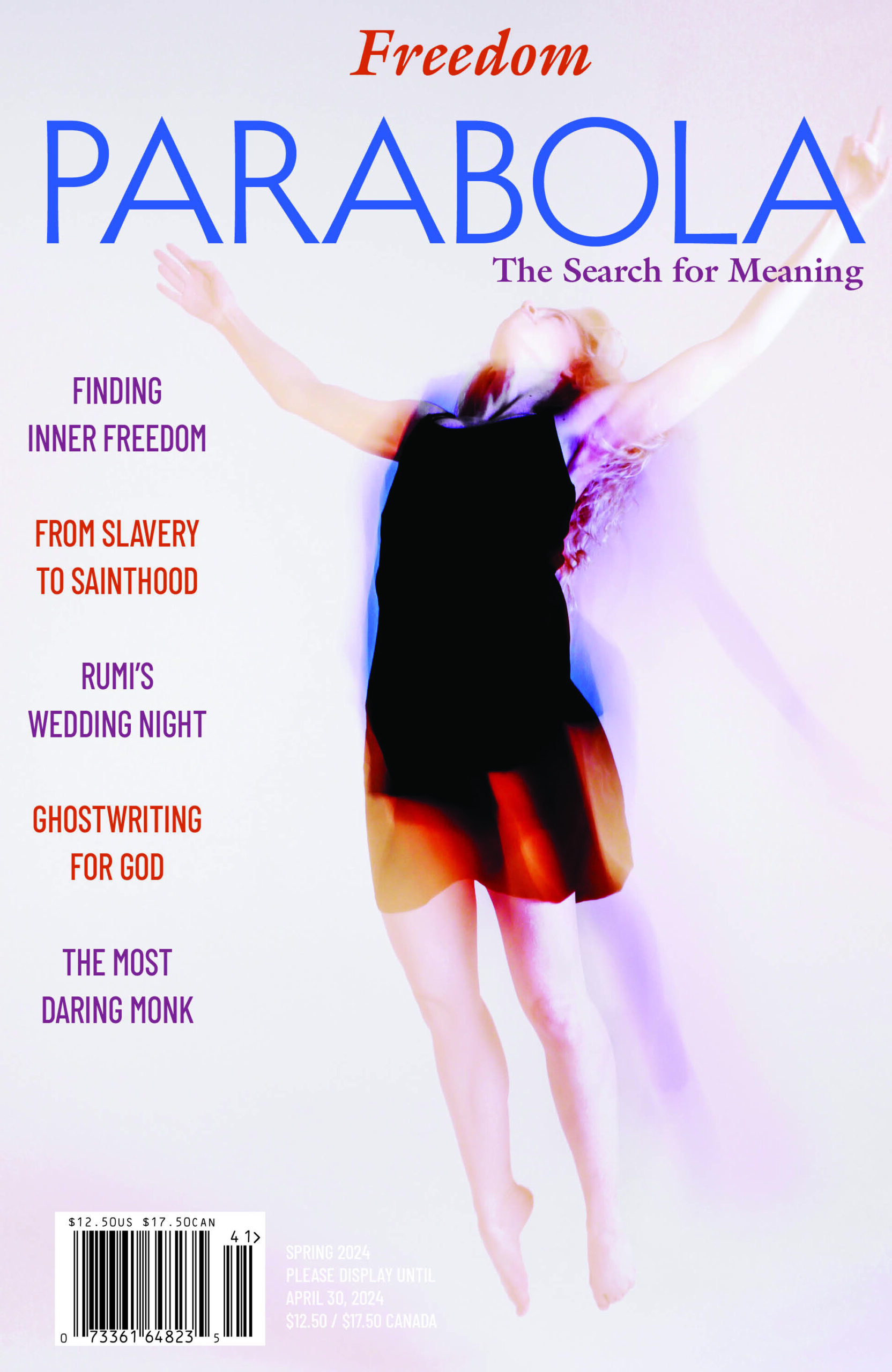
Spring 2024:
FREEDOM
“We hope you enjoy this issue, dedicated to the wish that we all awaken to the spirit that concentration camp survivor Viktor Frankl wrote of, of how ‘everything can be taken from us but the last of human freedoms … the freedom to choose our spirit in any circumstance.’ ”
Current Issue
- Rising Above
 From slavery to the priesthood
 - Voice and Freedom
 Expressing our essential self
 - Meeting the Teacher
 A life-changing encounter with spiritual authority
 - I Knew Two Men
 Remembering Harold Bloom and Jacob Needleman
 - The Word for Soul
 A lyrical song of love, nature, the sacred
 - Tenzin’s Escape
 Bön monks flee the invaders of Tibet
Online Exclusives

PARABOLA needs your help!
We urgently need your help to carry on. Parabola is a nonprofit, independent, reader-supported publication. In order to publish each issue, we depend directly upon the generosity of readers like you. Without your support, there would be no Parabola.
Find out how you can help save Parabola!
Four times a year for nearly 50 years Parabola has gathered the wisdom of the world’s spiritual traditions to illuminate the central questions of life.
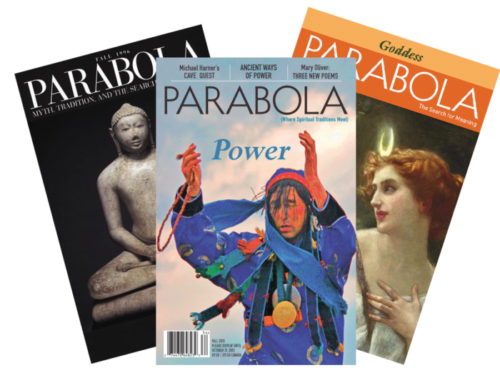
Sign up for Parabola‘s newsletter and receive a free PDF of Vol. 44:2 THE WILD
Book Launch with
Tracy Cochran
FRIDAY, APRIL 19, 2024
6:00 PM–7:30 PM
The Rubin Museum
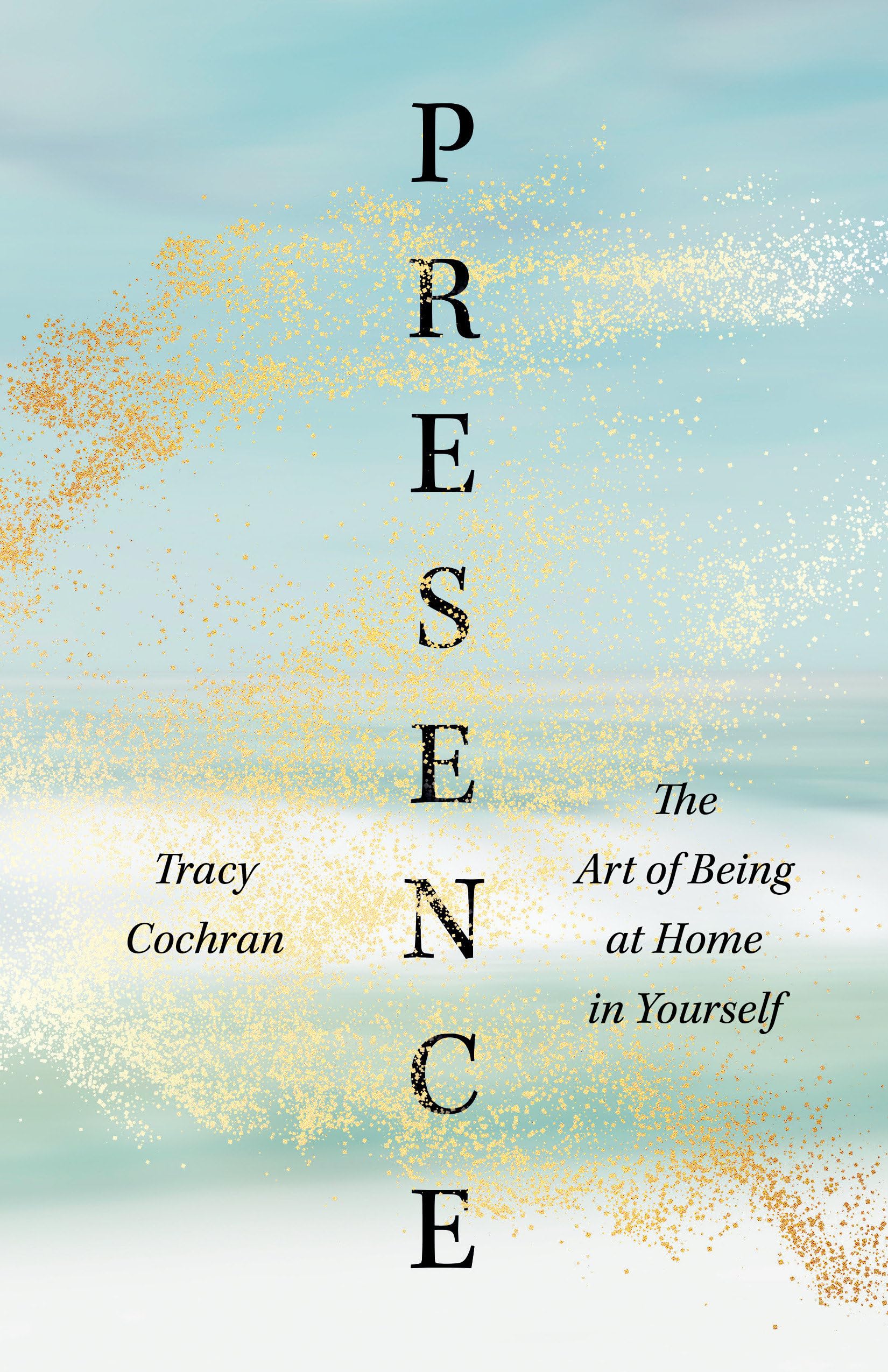
Parabola’s Editorial Director, Tracy Cochran, has a new book coming out on 16th April!
‘In 20 short, gem-like chapters, meditation teacher Tracy Cochran invites us to explore living fully in the present moment as a revolutionary practice.’
‘Presence: The Art of Being at Home in Yourself’ is now available to preorder at Shambhala Publications.
Upcoming Issues
Fall 2024: SORCERY, WITCHCRAFT, MAGIC
(submission deadline: June 01, 2024)
Winter 2024-2025: GRIEF & GRATITUDE (submission deadline: September 01, 2024)
Please note that these deadlines apply to editorial submissions; our schedule for advertisers may be found here.
The Golden Rule Pledge
All life strives to incorporate the principle of the Golden Rule. Directing our attention toward understanding this most basic principle gives us a reasonable, common sense, and compassionate direction in anything we do. Remembering to use the Golden Rule in our own lives transforms our relationship with ourselves, with others, and with planet Earth.
AN INVITATION TO ALL:
1st—Strive and Incorporate: I will strive to understand the meaning of the Golden Rule for myself and how I wish to incorporate it in my life, recognizing that this effort is sometimes hard and yet always helpful. This is my pledge.
2nd—Invite and Request: I will invite others to do the same: live by the Golden Rule. We can change the world for the better when we apply the Golden Rule in all organizations: environmental, civic, legal, economic, educational, political, or social entities, including religious and faith traditions. This is my petition.
3rd—Stand in Unity: I will join with those on this planet who wish to take real responsibility toward compassion and fairness; and to build an understanding with others about what is to be done based upon the principle of the Golden Rule. Simply stated,
Treat others and the Earth the way you want to be treated
Respect for All Life is the foundation.
The Great Law of Peace, Native American
The Golden Rule Project will continuously make the results of this pledge/petition/proclamation available for all to see and utilize. The more of us who agree and sign, the more power we share as we petition our representatives to live by and apply the Golden Rule in real life situations. This is our Proclamation.